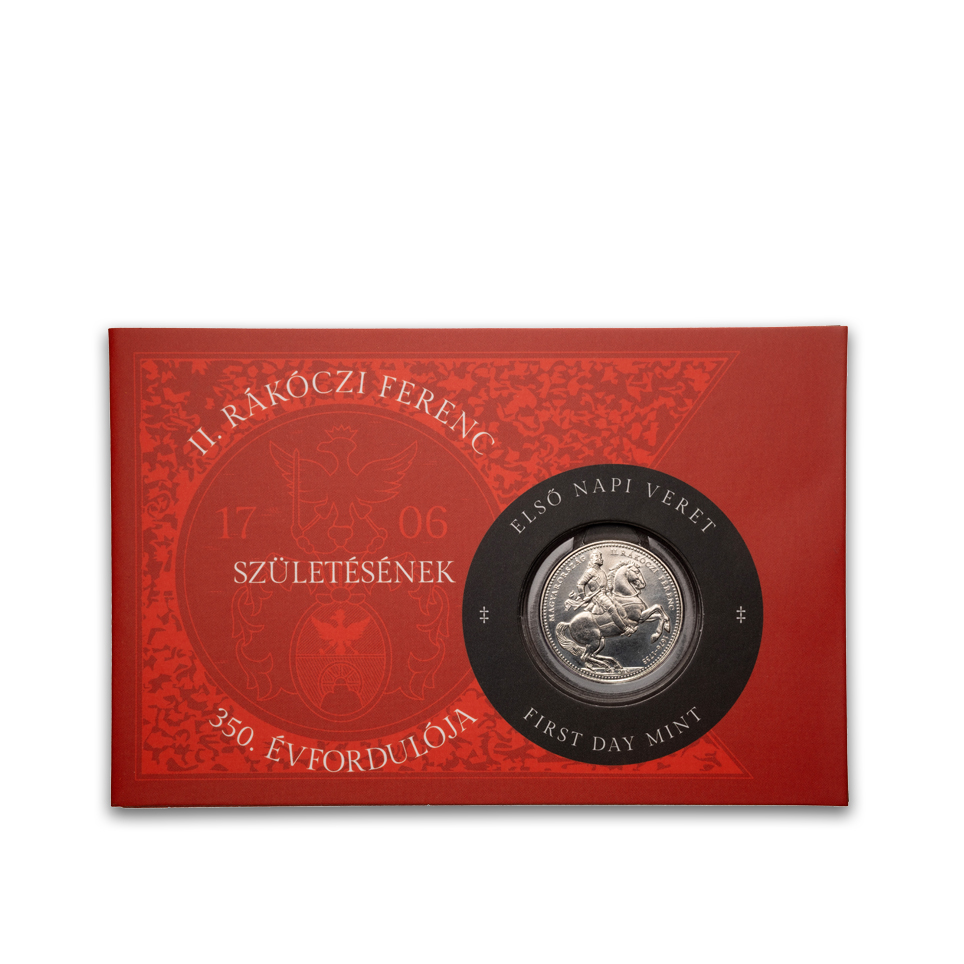
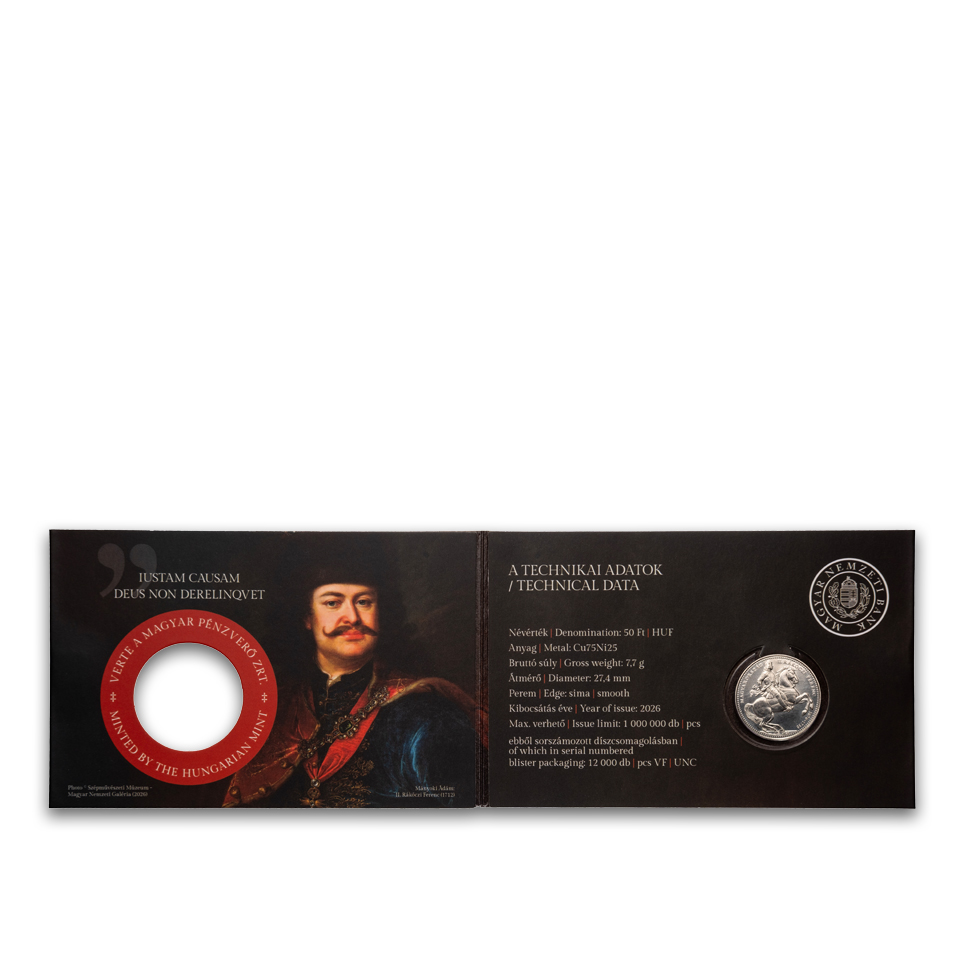
Description
Francis II Rákóczi was born in Borsi in 1676, as the sole male heir to one of the wealthiest Hungarian noble families, ranked as princes. His mother, Ilona Zrínyi was responsible for the heroic defence of the Munkács castle against the Habsburgs, which had a profound effect on Rákóczi’s patriotic sentiments. Rákóczi launched a war for independence against the Habsburg monarchy in 1703, with his “Kuruc” forces quickly gaining control over most of the country. In 1705, the National Diet held in Szécsény elected him to be the ruling prince and thus he became the political and military leader of the struggle. His sense of diplomacy is highlighted by his attempts to forge relations with several European powers, for instance the French king Louis XIV. Ultimately, the outcome of war was decided at the Battle of Trencsén in 1708, where the Kuruc army suffered a major defeat. Rákóczi did not accept the Treaty of Szatmár and instead chose exile, rather than swear allegiance to the Austrian Emperor. He spent his final years in the Ottoman Empire in Rodostó (present-day Tekirdag˘, Türkiye). His ashes were ceremonially returned to Hungary in 1906 and laid to rest in the cathedral at Kassa (present-day Košice, Slovakia). His name is honoured in Hungary with innumerable streets, squares and schools, and is also remembered in the famous Rákóczi march, acknowledging him as one of the most important symbols of the Hungarian nation.


